

External Quality Assessment (EQA) of your internal audit function
An external quality assessment is more than a compliance exercise. It is a moment of reflection on the role, positioning and added value of your internal audit function within the organisation.
Quality, independence and professionalism
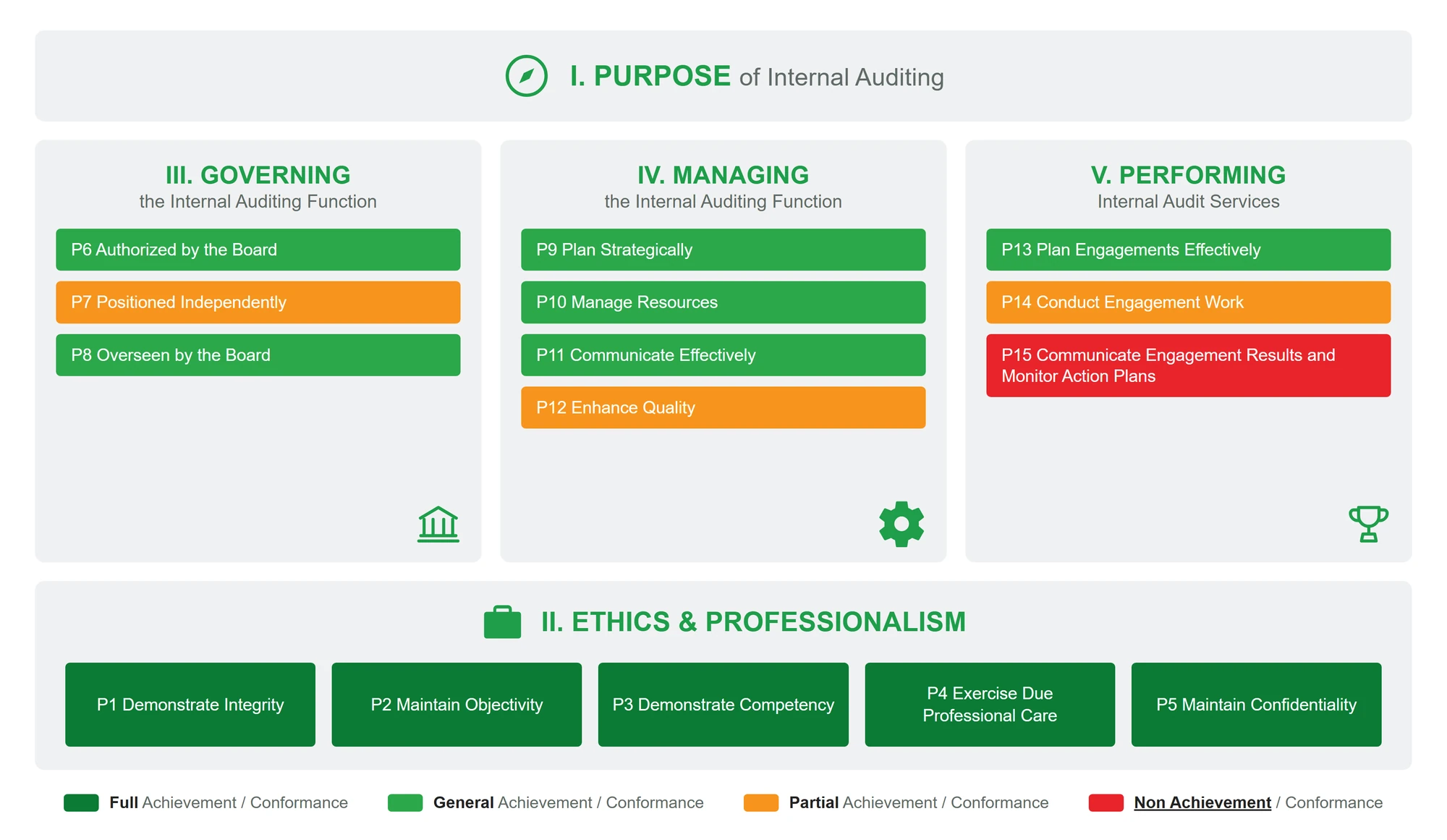
Internal supervisory bodies, such as (audit committees of) supervisory boards, play an important role in safeguarding the quality and independence of the internal audit function. Periodic external assessment is essential here, both from professional audit standards (such as the Global Internal Audit Standards of the IIA) and from good governance.
Specialist support, tailored to you
ONE Risk Advisory is a specialist provider of External Quality Assessments (EQA). We work exclusively with experienced quality assessors who have in-depth knowledge of internal auditing and professional standards (such as the Global Internal Audit Standards).
We support organisations with, among other things:
- conducting External Quality Assessments (EQA), readiness checks or pre-assessments
- assessment against applicable professional standards (such as the Global Internal Audit Standards)
- evaluating the positioning, independence and effectiveness of the internal audit function
- formulating concrete and achievable improvement points
We are available for both advisory and delivery roles. We can also support the implementation and embedding of improvements arising from external quality assessments carried out by others.
Our approach
Broad expertise
Our External Quality Assessments (EQA) are carried out by professionals with extensive experience in internal auditing and external quality assessments. They understand the governance and supervisory context in which external quality assessments take place and communicate clearly with heads of Internal Audit, boards and (audit committees of) supervisory boards.
Thanks to their broad experience, they are also able to benchmark and share relevant good practices, appropriate to the nature and size of the organisation.
EQA, Quality Improvement or Self-Assessment?
| Aspect | External Quality Assessment | Quality Improvement | Self-Assessment (SAIV) |
|---|---|---|---|
| Purpose | Independent assessment of the audit function against the IIA Standards | Continuous improvement between formal assessments | Internal self-assessment with independent validation |
| Frequency | At least once every five years (mandatory) | Ongoing | Interim, often in the years between two EQAs |
| Independence | Fully external and independent | Guided by an external specialist | Performed internally, validated externally |
| Framework | IIA Global Internal Audit Standards 2024, Standard 8.4 | IIA Quality Assurance and Improvement Program | GIAS Standard 12.1 and 8.4 (validation) |
| Lead time | 10 to 14 weeks | Continuous | Shorter, depending on scope |
| Outcome | Independent conformance opinion plus improvement plan | Concrete improvements in design and delivery | Self-assessment, independently confirmed |
EQA on the agenda ? Schedule an intake.
An intake takes one hour. We map your QAIP status and discuss the optimal timing for your audit committee.
Schedule an EQA intake